
AI beauty influencer: makeup, skincare and the disclosure rules
How to run an AI beauty influencer for makeup and skincare: character design, formats, paying brands, five prompts, and why product results can't be faked.
Can an AI character do beauty content?
Yes, but not every kind. An AI beauty influencer can teach looks, explain techniques, style hair, show product textures and share routines. It cannot truthfully show what a real product does to real skin, because the skin is generated.
That one rule shapes the whole account. Beauty audiences buy based on results. If your character "tries" a foundation and the AI renders flawless coverage, viewers have learned nothing about the product. Build the account around teaching and inspiration, and keep product results out of it unless they are shown on real footage you have rights to.
Where an AI beauty account fits
Audiences that respond well to a character-led account:
- People learning makeup basics who want clear, slow technique videos.
- Fans of editorial and fantasy looks: bold color, graphic liner, festival looks.
- Hairstyle tutorials for specific hair types and lengths.
- Nail art inspiration and color palettes by season.
- Beauty history: how looks from past decades were built.
Editorial and fantasy looks suit AI best. They are about ideas and color, and viewers do not expect them to be a product test.
Design a face built for makeup
Close-ups carry beauty content, so the reference photos matter more than in most niches. In ClickPop's Characters studio, design a fictional adult and draw 1 to 10 references with an emphasis on close-ups: front, three-quarter, profile, and a bare-face close-up with neutral lighting. That bare-face reference is your base for every look.
Decide skin tone, undertone, eye shape, brow shape and hair texture in words and keep them in a character card. If you later teach a look "for hooded eyes," the character needs hooded eyes in every shot.
Use soft, even lighting for tutorials. ClickPop's lighting presets include setups that suit beauty work; a large soft key from the front with a fill is a safe default.
Formats that work in beauty
- Step-by-step looks: four to six steps, each as its own short clip with a caption naming the step.
- Before and after of a look, not a product: bare face to finished editorial look.
- Color palette posts: a motion graphic of the season's shades with names.
- Hairstyle breakdowns: braid patterns or updos shown from the back and side.
- GRWM storytelling: the character gets ready for an event while talking through choices.
Five video ideas with sample prompts
- Graphic liner in three steps. Prompt: “Extreme close-up of the character's eye as a thin black liner flick is drawn from the outer corner, soft frontal beauty light, steady camera, slow and precise.” Try it
- Festival look reveal. Prompt: “The character turns from profile to face camera revealing iridescent lilac eyeshadow and tiny silver face gems, golden hour light, slow push-in.” Try it
- Autumn lip palette. In Faceless Studio: “A swatch board of six autumn lip shades named brick, plum, cinnamon, rose clay, berry, cocoa, risograph style, gentle slide-in animation.” Try it
- Braided crown tutorial. Prompt: “Back view of the character's long wavy hair as two braids are wrapped into a crown, soft daylight, slow orbit to three-quarter view.”
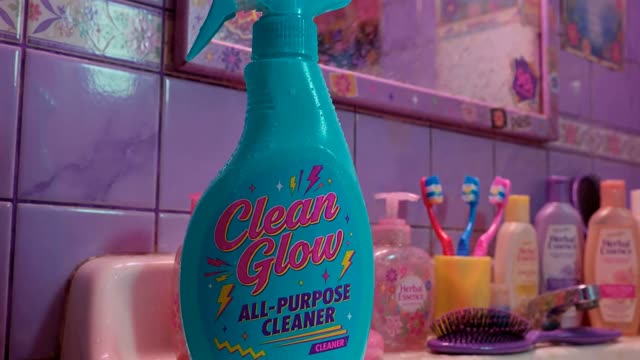
- Bathroom shelf tour. Prompt: “Slow pan across a tidy bathroom shelf with unlabeled glass bottles, a ceramic dish and a folded towel, warm morning light.” Keep bottles unbranded.
For step-by-step looks, render each step as its own clip from the same close-up angle and lighting, then cut them in order. Keep the prompt identical except for the one change in the step, such as “now with a soft brown crease shade added.” Changing the camera or the light between steps makes it look like a different face, and viewers notice.
Write captions that name the technique, not a promised result. “Step 2: blend the crease with a fluffy brush in small circles” teaches something. “Step 2: instant lift” is a claim the character cannot back up.
Who pays in beauty
Beauty brands spend heavily on creator content, but they will judge an AI account carefully. Categories that can fit: makeup tools and brushes, hair accessories and styling tools, nail polish and nail art kits, mirrors and lighting, cosmetic bags, and beauty apps. Affiliate links through Amazon Associates, TikTok Shop and retailer programs cover many of these; rates vary and change.
Products whose selling point is a result on skin, such as foundation coverage or skincare outcomes, are a poor fit. If a brand asks you to show results on an AI face, decline or ask for real footage you can use instead.
Your own digital products work well here: printable face charts, seasonal palette guides or a technique course.
Disclosure rules and cautions
- Label the character as AI. Realistic AI content needs labels on YouTube, TikTok and Meta platforms as of October 2026; check each platform's current page. In the EU, the AI Act's transparency rules apply from August 2026.
- Disclose sponsorships in the video itself, not only in a hashtag. Under FTC rules, brands share responsibility, and virtual influencers follow the same rules as people.
- No skincare or health claims. Do not say a product clears, heals, reduces or treats anything. Point viewers to the brand's own information or a professional.
- Never show a fake product result as if it were a test.
- No real people's faces, and no brand logos on packaging unless the brand approved it.
Questions
Is it allowed to promote makeup with an AI influencer?
Yes, if you disclose the sponsorship clearly in the video, label the character as AI, and do not present AI-rendered results as real product performance.
What beauty content suits AI best?
Technique tutorials, editorial and fantasy looks, hairstyles, nail art and color palettes. These teach ideas rather than testing a product on skin.
Can my AI character review skincare?
It can describe packaging, texture and the brand's own stated claims, attributed to the brand. It should not imply personal results, and it should not make health claims.